
Poppa never spoke to his children about the war. But sometimes he spoke to me.
I’ve written about it before, the feeling that my Asian heritage didn’t stop him from loving me but made him reflect on his experiences in the war.
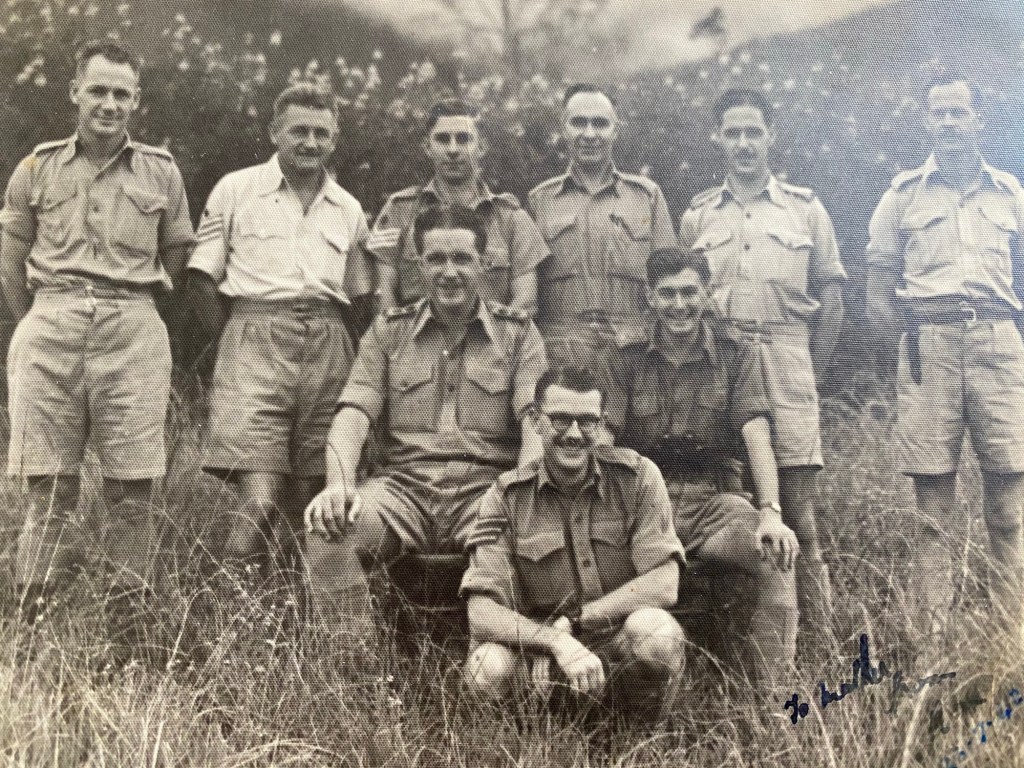
One afternoon, he sat me down in their home and told me in a stilted voice about what he saw as the “inherent evil” of the Japanese. Of men he knew having been disemboweled, of their cruelty in the POW camps. Of the things he saw in Papua New Guinea.
But none of that was spoken of to his children, when he returned he closed that chapter and sealed it.
Greg wrote: “Charleville! Only a dot on a map of Queensland to strangers to it, this railhead 483 train miles (777 kilometres) west of Brisbane was to my father, Ron, the centrepiece of an alluring mosaic of arid landscapes, scorching summer days and bone-chilling winter nights. Far removed from the constraints of a coddled city upbringing, this mosaic had been the backdrop for his freedom-rich adventures as a station hand and shearing roustabout on sheep stations of between 20 and 100 thousand acres. However, the rough and ready bachelor lifestyle this harsh environment revealed only lasted a few years before World War II intervened.
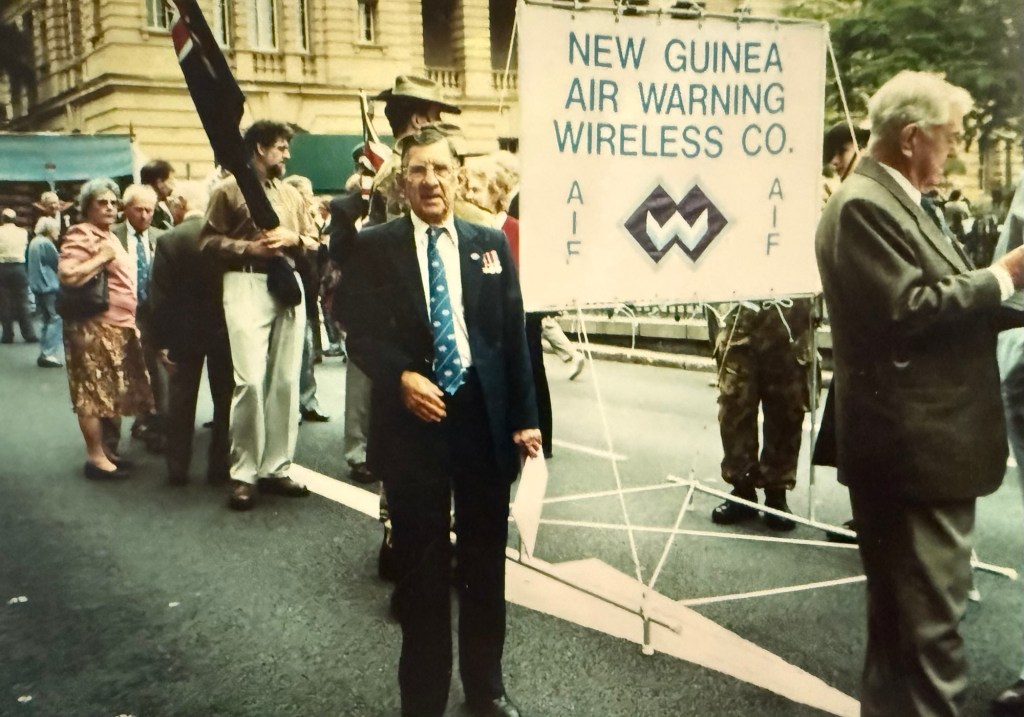
‘The War’ that interrupted Dad’s idyll had offered its own adventures; ones of a far different and danger-ridden kind that took him behind Japanese lines in the jungles of New Guinea and into other theatres of the Pacific Ocean conflict, shuttling him about in Catalina ‘flying boats’ and a variety of other military vehicles. Holding the rank of Staff Sergeant in the Australian Army’s Corps of Signals, he was engaged in the hush-hush work of radio monitoring the enemy’s air, shipping and troop movements. His mind-warping sojourn ended abruptly when America atomic bombed the Japanese cities of Hiroshima and Nagasaki in August 1945. Heeding the Army’s simplistic advice to discharged service personnel to forget about the unspeakable events of their engagement and get on with their lives, he accepted his reward of training as a wool classer.”
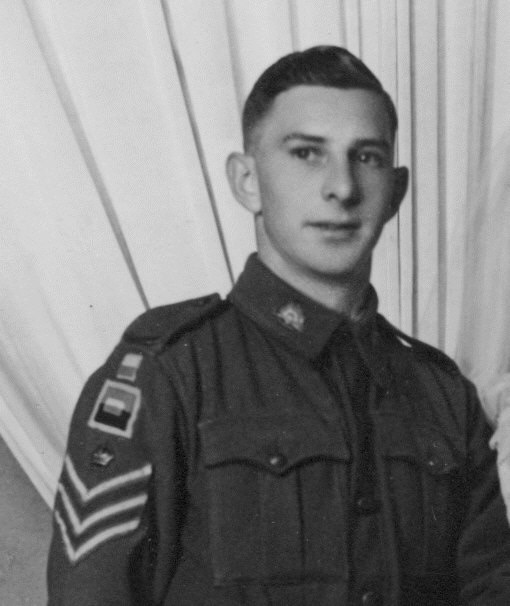
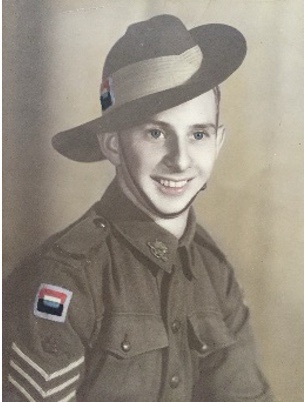
I wonder how Poppa really felt when his son announced his intention to marry a half Chinese girl, Jennifer, daughter to Chinese Harold and his wife Valerie.
We have deeply racist opinions from Valeries mother when she announced her marriage. Valerie was disowned for a period of time in protest. Much harder to pretend the past opinions of family were wholesome when people keep the letters.
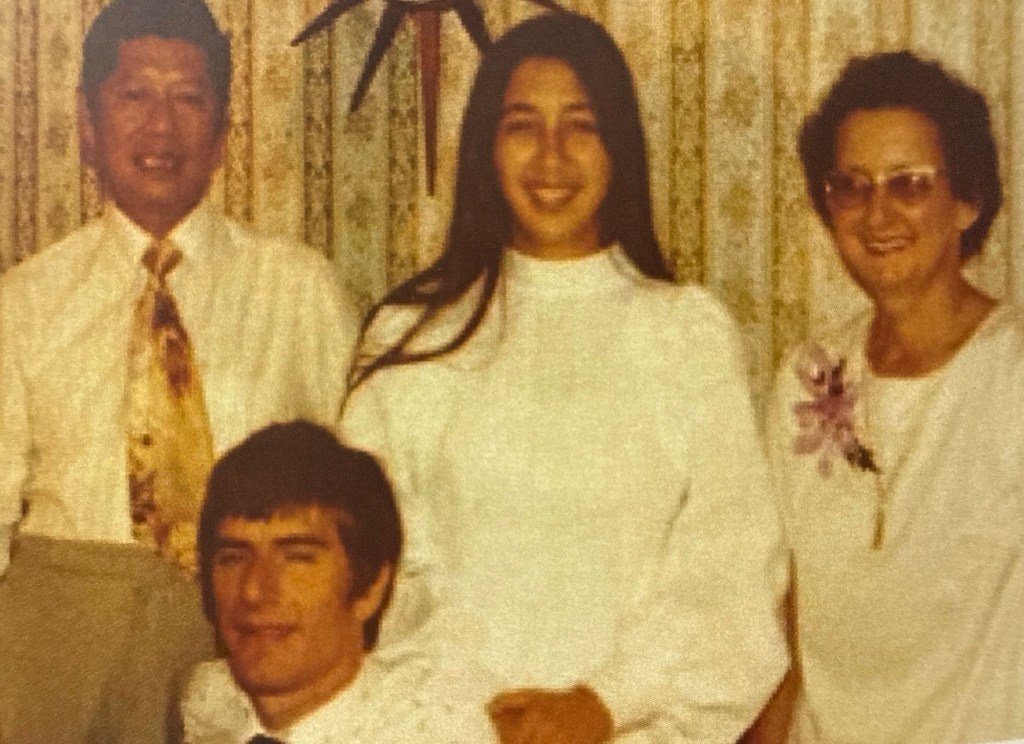
Perhaps their mutual hatred of the Japanese assisted. Greg wrote “(Harold) was a humble and generous man, who had endured much, some of it in the form of enslavement by occupying Japanese forces in Hong Kong during World War 11.”
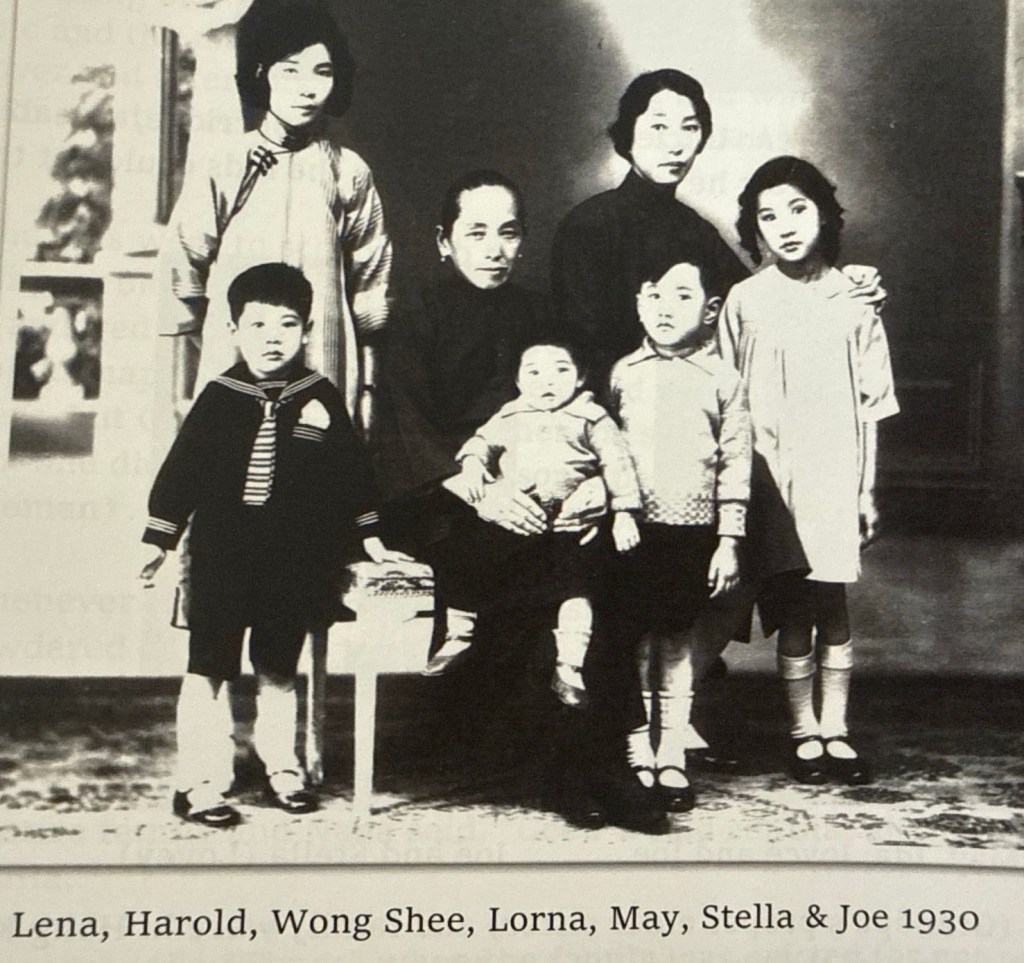
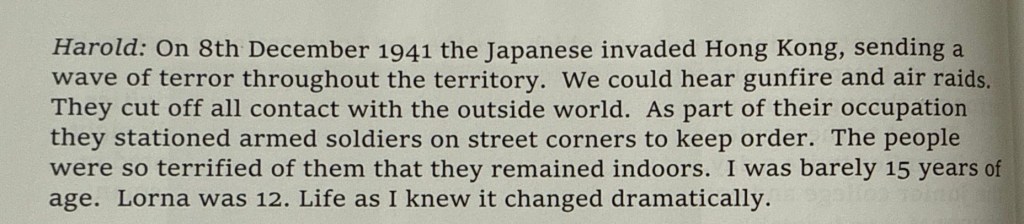
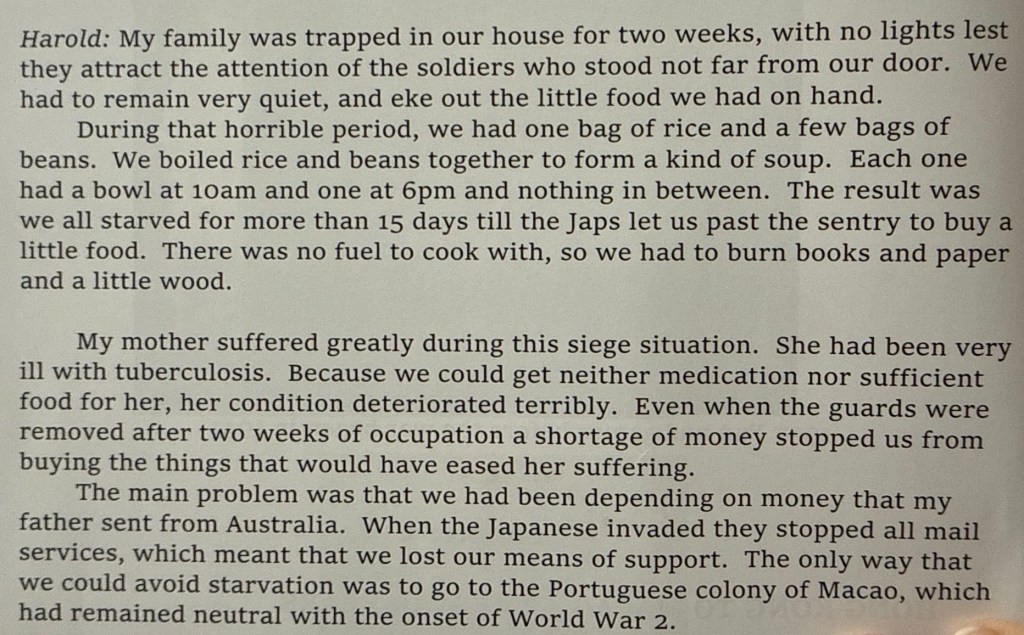
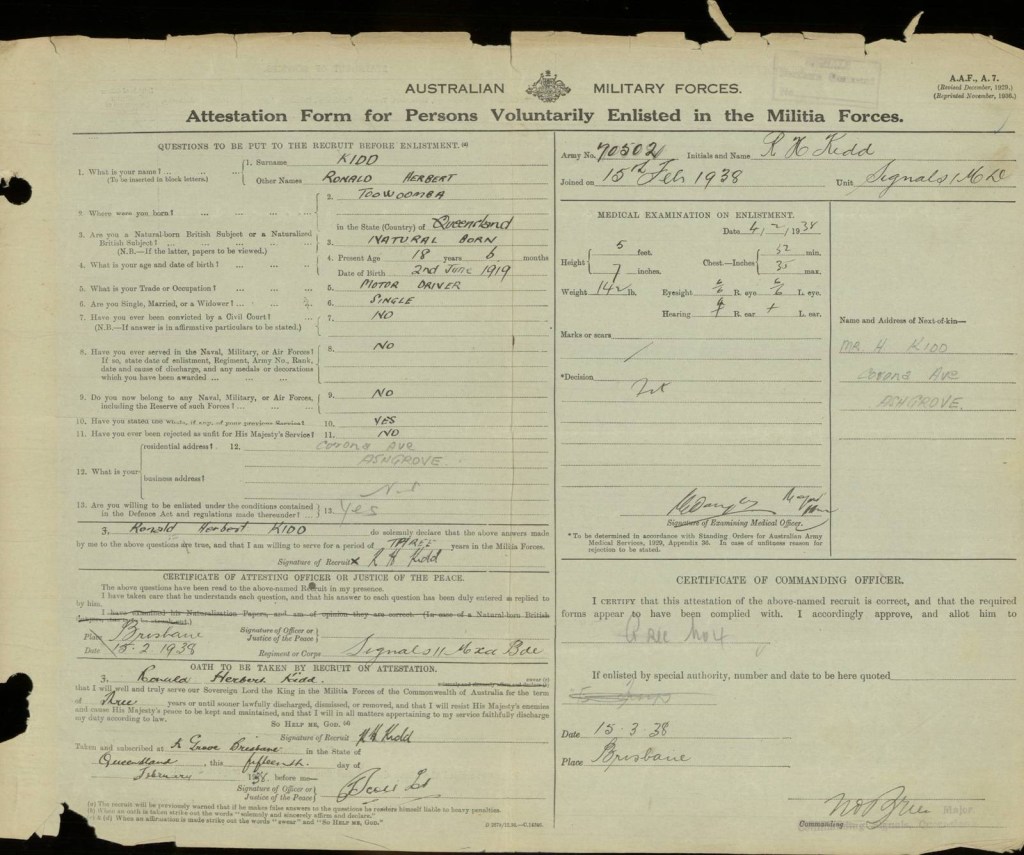
Ronald was stationed in Papua. He served until he was discharged on 27 September 1945.
Harold traveled through Papua New Guinea in 1947 on a cargo boat on his way back to Australia. Although Harold’s father Harry was an Australian citizen, born to Kwong Sue Duk’s fourth wife Wong Shee, Harrys wife Lena was on a student visa and attending a catholic college in Rathdown Street Carlton when she got pregnant in Australia in 1926. That meant she was forced to leave the country to give birth, moving to Kowloon, Hong Kong.
And even the wars before this affected the families. War and service affected every member of the family. Greg’s mother’s father served in WW1 as a medic.
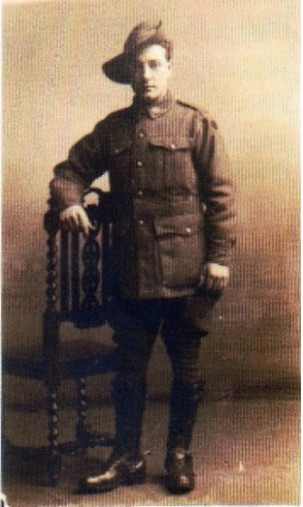
“Grandfather Aird was a short, aloof taciturn man who smelled of pipe smoke and sweat. It was a natural smell that was distinctively his, as far as I was aware. There was mystery about him too that to my young mind was wrapped up in the idea that he was a former drummer in a bagpipe band. That role seemed an ill-fitting one because he was anything but the dashing, kilt-wearing chap I imagined was integral to the role. Mum said he had loved to twirl his drumsticks with great show; now his demeanour was anything but showy.
Sitting ominously on a shelf of the kitchen sideboard was his Australian Army ‘slouch hat’, which Mum said was “from his time as a medic in the ‘Light Horse’”. Mysterious though the hat was with its plume of emu feathers spilling over one side, it was of much less interest to me than what sat proudly atop the sideboard; it was a wooden model of a lighthouse. Lighthouse-keeping had been one of Grandfather’s many occupations.”
Despite war reaching into every household, my father was never deeply interested in war. Taught by his father that it was a necessary evil that we put aside. Not to celebrate. But to move past.
One night when my father couldn’t sleep he wrote “The stream of thoughts that flows into my consciousness is a mixture of the calamitous world events of the present and recollections of my youth.
They do not seem very important when compared with the world-changing
actions of terrorists that began on 11 September with the aircraft bombings in America that reduced the World Trade Center and a wing of the Pentagon to smoking rubble. Those reprehensible actions terminated the lives of thousands of people. And skewed the lives of millions more!
One month hence, as intense retaliatory bombardment of Afghanistan continues, people around the globe wait while the death toll climbs and millions of lives hang in the balance. The citizens of the West are now familiar with two names synonymous with terror: Osama Bin Laden and Al Qaeda.
Doubts about the significance of my story crowd in, focusing on the portions set in the tiny West that I know very well.
How significant is Charleville, which to me is the centrepiece? After all, it is only one of many isolated parts of Australia. One indisputable fact elbows its way in: the world of my youth is very different to life as I know it today.”


Leave a Reply